


- The exhibition Leonora Carrington: The Symptomatic Surreal , part of the inaugural programme of the new Faro Santander art centre, will include the work known as Villa Pilar, painted by Carrington in 1940 during her stay in Santander, and which has remained unseen for decades.
- As a result of research by the Faro Santander team, the painting is included in the first iteration of the exhibition at the Freud Museum in London, ahead of its presentation in Santander from 8 September.
- The exhibition explores a pivotal moment in the artist's life, bringing together for the first time the two pieces Leonora created during her time in Santander, along with some of the drawings from her previously scattered notebooks.
- Faro Santander is a new cultural project by Fundación Banco Santander aimed at becoming a point of reference where art, culture, and technology converge in an open and accessible environment for all audiences.
The countdown begins for the opening of Faro Santander, the city’s new art centre, which brings together artistic heritage, technology and contemporary culture. One of the exhibitions that can be enjoyed at the centre from 8 September will be Leonora Carrington: The Symptomatic Surreal , the first display dedicated exclusively to the artistic work produced by the painter, writer, and visionary during her stay at Dr Morales’ sanatorium in Santander.
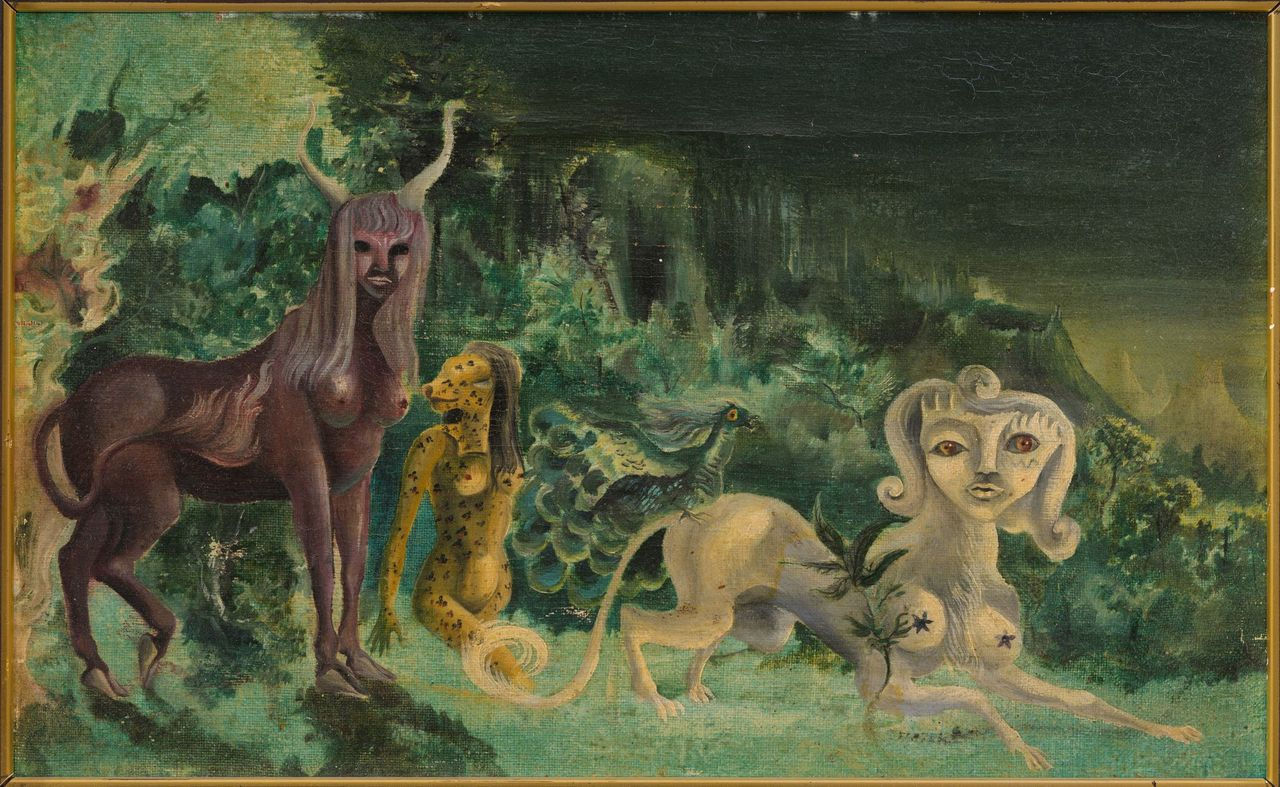
The show represents a milestone thanks to the public unveiling Faro Santander team – of the oil on canvas known as – a result of the research work by the Villa Pilar , which the artist dedicated and gifted to her doctor upon leaving the sanatorium and has remained hidden for decades. The painting is owned by the Morales family and is being shown publicly for the first time, allowing for a deeper and more nuanced understanding of a crucial period in Carrington’s career. This work, featuring four anthropomorphic creatures characteristic of the artist’s imagination, has never been exhibited or reproduced before.
“The recovery of Villa Pilar is not only a material discovery, but also an opportunity to reclaim a long veiled artistic and emotional memory” highlights Daniel Vega, director of Faro Santander. “During her stay in Santander, Carrington conceived one of the most poignant autobiographical accounts in twentieth literature, Down Below century (1944), and produced a series of drawings and paintings that encapsulate the intensity of that experience”.
Co organised with the Freud Museum in London, the exhibition Leonora Carrington: The Symptomatic Surreal is the first to bring together some of the drawings from her notebooks created during her time in the sanatorium, scattered until now. This period begins with the artist’s dramatic escape from Nazi occupied France and her subsequent hospitalisation at Dr Luis Morales’ sanatorium in Santander. As part of her treatment at the clinic, from 24 August 1940 to 1 January 1941, the medical staff encouraged Carrington to draw in order to “organise her thoughts and express them”. The artist also worked independently in her sketchbooks, creating numerous pencil drawings and two oil paintings: Down Below and the work known as Villa Pilar .
Coorganizada junto al Freud Museum de Londres, Leonora Carrington: el surrealismo sintomático es la primera exposición en reunir algunos de los dibujos de sus cuadernos realizados durante su estancia en el sanatorio, hasta ahora dispersos. Este periodo se inicia con la dramática huida de la artista desde la Francia ocupada por los nazis y su posterior hospitalización en el sanatorio del Dr. Luis Morales en Santander. Como parte de su tratamiento en dicha clínica, desde el 24 de agosto de 1940 y hasta el 1 de enero de 1941, el personal médico animó a Carrington a dibujar para “organizar su pensamiento y explicarse ante él”. La artista también trabajó de manera independiente en sus cuadernos de bocetos, realizando numerosos dibujos a lápiz y dos óleos: Down Below y el conocido como Villa Pilar.
“These works were produced under circumstances unlike any Carrington had experienced before in her life”, says the exhibition’s curator, Vanessa Boni. “ Villa Pilar is an oil on canvas that depicts four creatures against a verdant backdrop with a volcanic landscape: the free horse – an enduring symbol of Leonora’s alter ego – alongside the rebellious hyena, the peacock – symbolising immortality and resurrection the white guardian dog”.
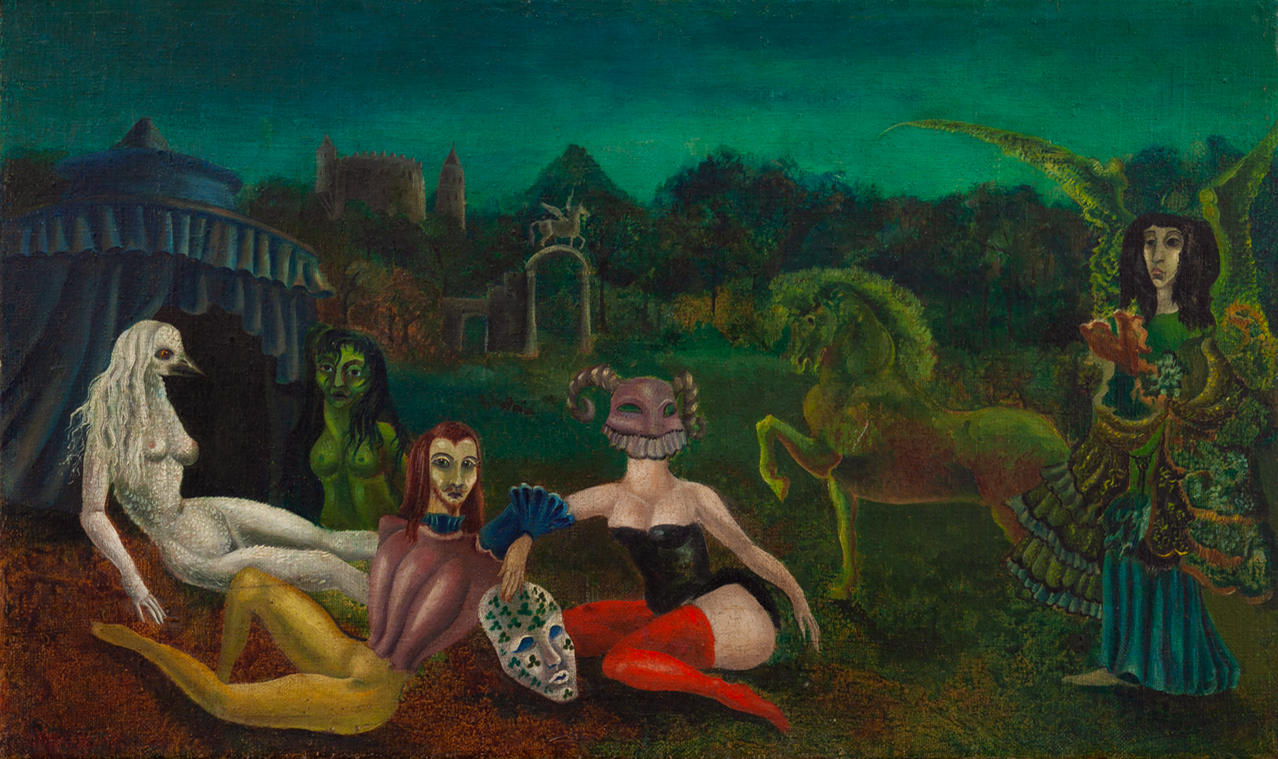
The artwork will be exhibited alongside the iconic canvas Down Below, portraying several residents on the grounds of the sanatorium transformed into hybrid human and animal creatures, a painting that was dedicated and gifted by the artist in 1941 in Madrid to the Mexican diplomat Renato Leduc, who assisted her in escaping to New York. It is the first time that both paintings will be exhibited together in the very city where Leonora Carrington created them.
"It is not simply a matter of showcasing the work of one of the most important Surrealist artists, but of recognising and revisiting a chapter of her life deeply rooted in this city. The fact that this aspiration is now taking shape within the framework of our first international collaboration only reinforces the foundational nature of this proposal for Faro Santander", highlights Daniel Vega.
Carrington referred to this period of her life as "down below", describing it as an experience akin to "being dead". Her evocation of the sanatorium as a mythical underworld serves as a guiding metaphor for the exhibition. Among the most remarkable elements it includes are Freud's antiquities, which he collected and displayed in his study, the heart of psychoanalysis, and which represent deities from the Egyptian underworld, including Osiris, king of the dead, and Anubis, guide of souls in the afterlife, half man and half jackal.
The exhibition also includes a participatory space that invites the public to explore the symbolic systems that structured Leonora Carrington's work: occultism, alchemy, and, uniquely, tarot. In 1955, Carrington created her own deck - a visual universe that reinterpreted esoteric archetypes from a surreal and deeply feminine perspective. Faro Santander activates this legacy through reading and interpretation workshops and collective creation sessions that turn the tarot into an exploration tool.
The work known as Villa Pilar will be showcased for the first time in the exhibition catalogue The Symptomatic Surreal. Leonora Carrington. Among the new essays, there is a chapter in which psychiatrist and art historian Salomon Grimberg recalls conversations with Dr Morales, reflecting on his encounter with Carrington, examining the artistic importance of the set of works Down Below, along with high-quality reproductions of the Santander paintings, drawings from her sketchbooks, and related materials. The original catalogue will be available for purchase at the centre store from 8 September.
Leonora Carrington (1917-2011)
Leonora Carrington was a British-born, naturalised Mexican Surrealist painter and novelist. Raised by a wealthy family in Lancashire, she rejected the upper-class social conventions of her upbringing and moved to Paris in 1937 to pursue a career as an artist. There, she began to develop a practice in the Surrealist idiom with her own distinctive artistic language that fused mythology, alchemy and the occult with a deeply feminist and rebellious imagination.
From the outset, Carrington emerged as an artist engaged with questions of identity, especially feminine identity, searching for ways to represent the vast otherness of the self. Her Surrealist debut, the painting Self-Portrait (Inn of the Dawn Horse), c. 1937-38, along with her first short stories published in French in 1938 and 1939, challenged traditional notions of the role of women in British society and the paradoxical position of being a woman artist within the Surrealist movement.
Human-animal hybrids, masked figures and alchemical symbolism defined Carrington's early works produced during and in the immediate aftermath of the Second World War. Following a period of psychological crisis, hospitalisation in Spain and exile in New York, Carrington emigrated to Mexico in 1942, where she spent the rest of her years. This move marked a transformative phase in her life and work.
Faro Santander, the new art centre bringing together artistic heritage, technology, and contemporary culture
The Leonora Carrington exhibition showcases the vision of the new centre, open to the world and at the same time deeply rooted in the territory. It adds to the extensive programme of exhibitions and activities that will be presented at Faro Santander on the occasion of its opening.
Faro Santander is a new sociocultural project of Fundación Banco Santander, aimed at becoming a point of reference where art, culture, and technology come together in an open and accessible environment for all audiences.
The centre will dedicate a whole floor to the largely unknown Banco Santander Collection, which will have a permanent and dynamic presence in the programme. In addition, another entire floor will host ambitious temporary exhibitions with a highly diverse focus, both in terms of their subject matter and temporal scope. Placed between them will be a novel space for experimentation and exploration suitable for families, a distinctive place where visitors can enjoy art and creativity in an environment specially designed for the purpose.
Faro Santander will also boast innovative facilities where technology plays a leading role and acts as a channel for various projects linked to the memory of Santander, innovation, and artistic experimentation. Visits to this new cultural centre will begin in an exhibition space dedicated to artists from Cantabria, where collaborative projects developed with various cultural agents in the region are presented.
About Faro Santander
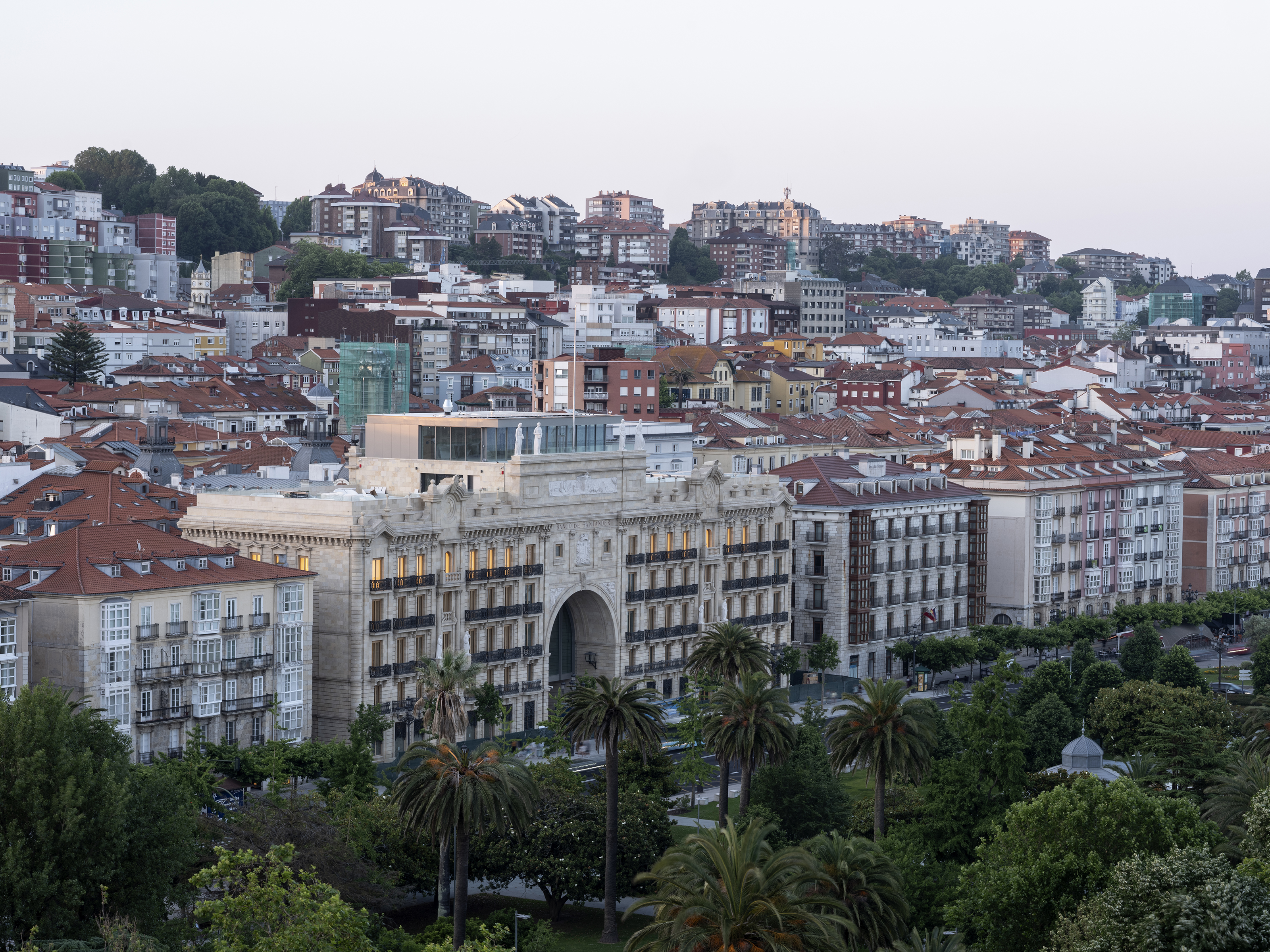
Faro Santander is a cultural project promoted by Fundacion Banco Santander. It is the city's new art centre, where art, culture, and technology come together in an open and accessible environment for all audiences. Faro Santander is located in the Pereda Building, the former main headquarters of the bank and one of the city's most emblematic constructions. This historic building is now being reborn with the ambition of becoming an innovative, inclusive cultural space, closely connected to society and to Cantabria's cultural ecosystem. The architectural design of the centre has been entrusted to British architect David Chipperfield, winner of the 2023 Pritzker Prize. The opening of Faro Santander will be a new milestone for the city, offering a dynamic, stimulating, and fun space where everyone is welcome.
About Fundacion Banco Santander
Fundacion Banco Santander works to contribute to building a more equitable, inclusive and sustainable society. To this end, it develops initiatives along three lines of action: promoting culture as a tool for understanding the world around us; social action to improve the situation of vulnerable groups, and education and entrepreneurship as driving forces in society.
FARO SANTANDER
Leonora Carrington: el surrealismo sintomático
Faro Santander
Paseo de Pereda 9-12, 39004 Santander (Cantabria), España
Dates: 8 September 2026 - 10 January 2027
Tickets: available soon at www.farosantander.com
More information: www.farosantander.com
Press contact
Acerca Comunicación
Silvia Velasco
Tel: +34 660 135 707
email: silvia@acercacomunicacion.org
Faro Santander
Eva Castillo Olarte
Tel: +34 658 614 810
email: evama.castillo@gruposantander.com

Noticias Relacionadas
.jpg)

Pº de Pereda 9-12
39004, Santander (Cantabria)


